Project Challenge
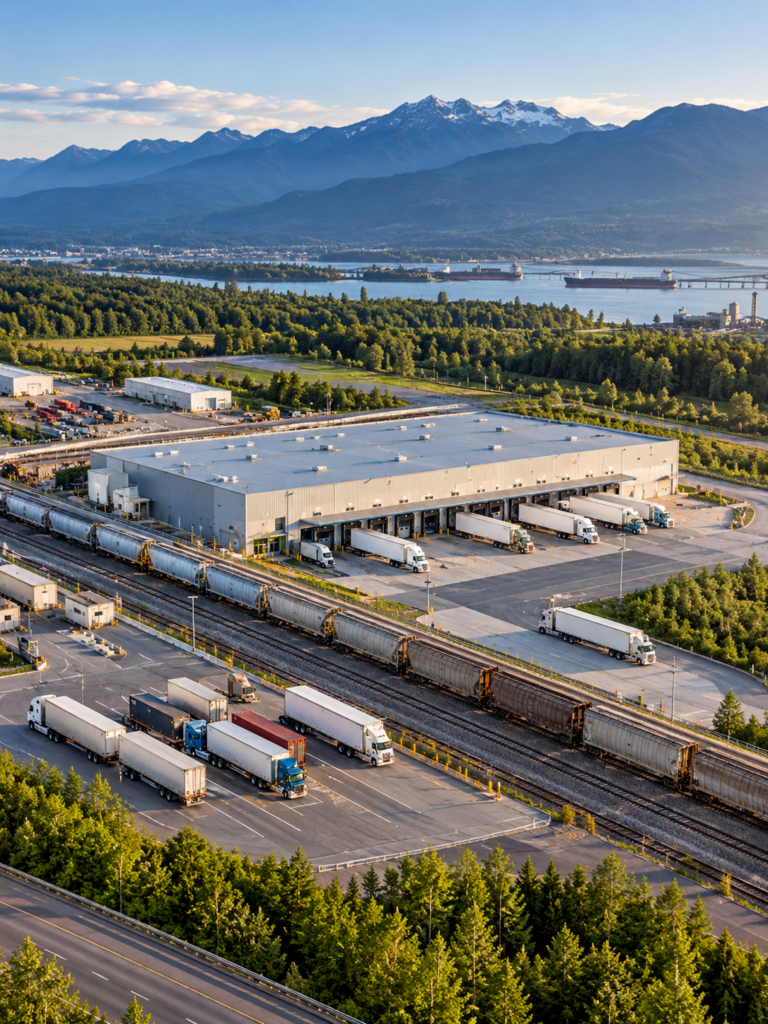
A proposed rail-connected logistics facility combined warehousing, truck loading, rail handling and shared yard infrastructure. Although each area had a design capacity, interactions between train movements, forklifts, truck arrivals and service times created uncertainty about achievable throughput.
The study needed to validate planned import and export volumes, compare infrastructure configurations and establish loading, handling and queuing requirements under variable operating conditions. Assessing these activities together was necessary to understand whether the integrated facility could meet its targets and which resources or operating rules would constrain performance.
Modelling Approach
A discrete-event simulation represented warehouse storage, truck-loading bays, forklift movements, rail operations and weigh-scale activity within an integrated logistics model. Warehouse modelling covered pallet storage, inventory flow and surge conditions. Loading and handling activities included bay service times, forklift cycles and routes, and interference associated with train movements.
The rail model represented train arrivals, track occupancy, shunting, loading and unloading. Site traffic modelling considered truck arrivals, service times, queuing and weigh-scale staffing. Together, these elements allowed alternative infrastructure arrangements and operating conditions to be evaluated against the planned import and export volumes.
Decisions Supported
The analysis assessed truck-loading bay requirements, forklift resources, rail-track options and weigh-scale staffing. It examined how loading arrangements, forklift routing and storage affected warehouse operations, and how track layouts, shunting and train occupancy influenced rail-handling flexibility.
The model also identified queues and conflicting movements that could affect service performance. This helped distinguish constraints requiring infrastructure or layout changes from those that could be addressed through operational management. Design and operating decisions could therefore consider the interactions between shared resources, rather than relying solely on the nominal capacity of individual assets.
Outcomes and Applications
The simulation confirmed that planned import and export volumes were achievable within the modelled operating assumptions. Across the tested conditions, the facility had sufficient overall capacity, but infrastructure utilization alone did not determine service performance.
Forklift travel and truck-loading arrangements were important to meeting daily targets. Alternative rail layouts improved operational flexibility, while weigh-scale staffing affected truck queue lengths. These findings supported decisions about infrastructure sizing, resource requirements and workable operating rules.
The study illustrates why spare capacity in individual assets does not necessarily guarantee reliable logistics performance. Evaluating truck queues, shared handling resources and train movements together provides a clearer basis for assessing an integrated facility.
Download Case Study (PDF)