Studies
Know what the design will deliver
A schedule gives the mill a rate. Variability and uncertainty decide what it delivers.
Every number in the investment case starts with production. Study schedules set tonnes and grade for each period. They don’t show how ore variability, stockpiles, equipment failures and maintenance interact inside that period, or what that does to annual production.
The study basis is uncertain too. Hardness, availability and equipment performance are estimates with a range, not fixed values. Read: Beyond the forecast
MISIM builds an integrated model of the chain, from the pit to the port, at the level of detail the decision needs. We work for the owner and bring an independent view. We sit alongside the study team and test the design basis as it develops.
The result is a production range rather than a single target: an expected outcome and its spread that the engineering team can design to, the financial model can use, and the board can sanction against.
See the range before you size the plant
A two-minute look at how ore variability, stockpiles and breakdowns move annual copper production in an illustrative concentrator, and how the model tests the options.
1
Study basis check
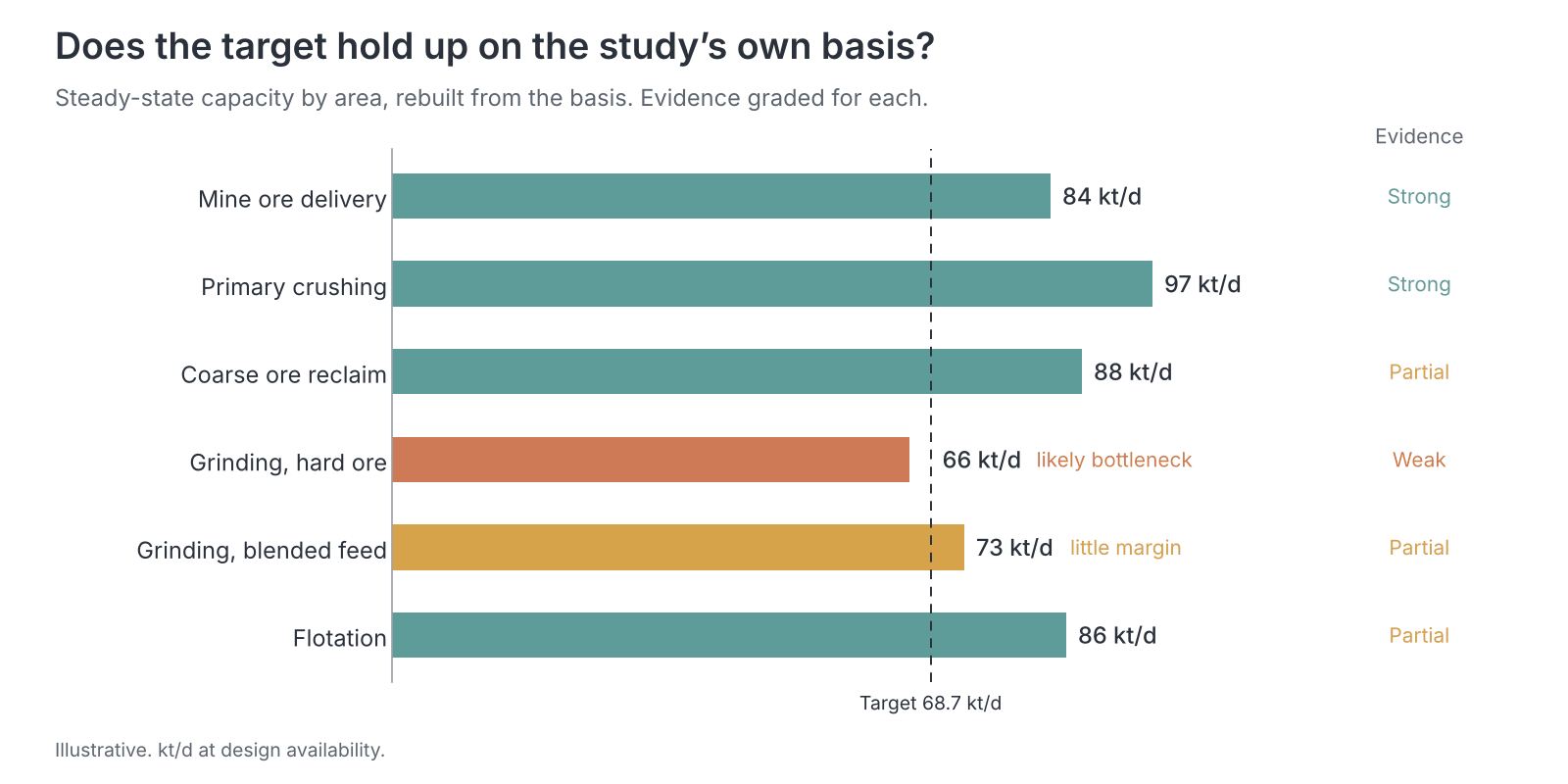
How was the production target built, and does it hold up on the study’s own basis? We trace the target back to the schedule, rebuild each area’s steady-state capacity from the design criteria and equipment data, and grade the evidence behind the assumptions that matter most.
It is a desktop review, not a simulation. It shows where the integrated model should focus.
- Each area’s capacity and the likely bottleneck
- The assumptions with the most influence, and how well supported they are
- What the integrated model should test next
2
Integrated production model
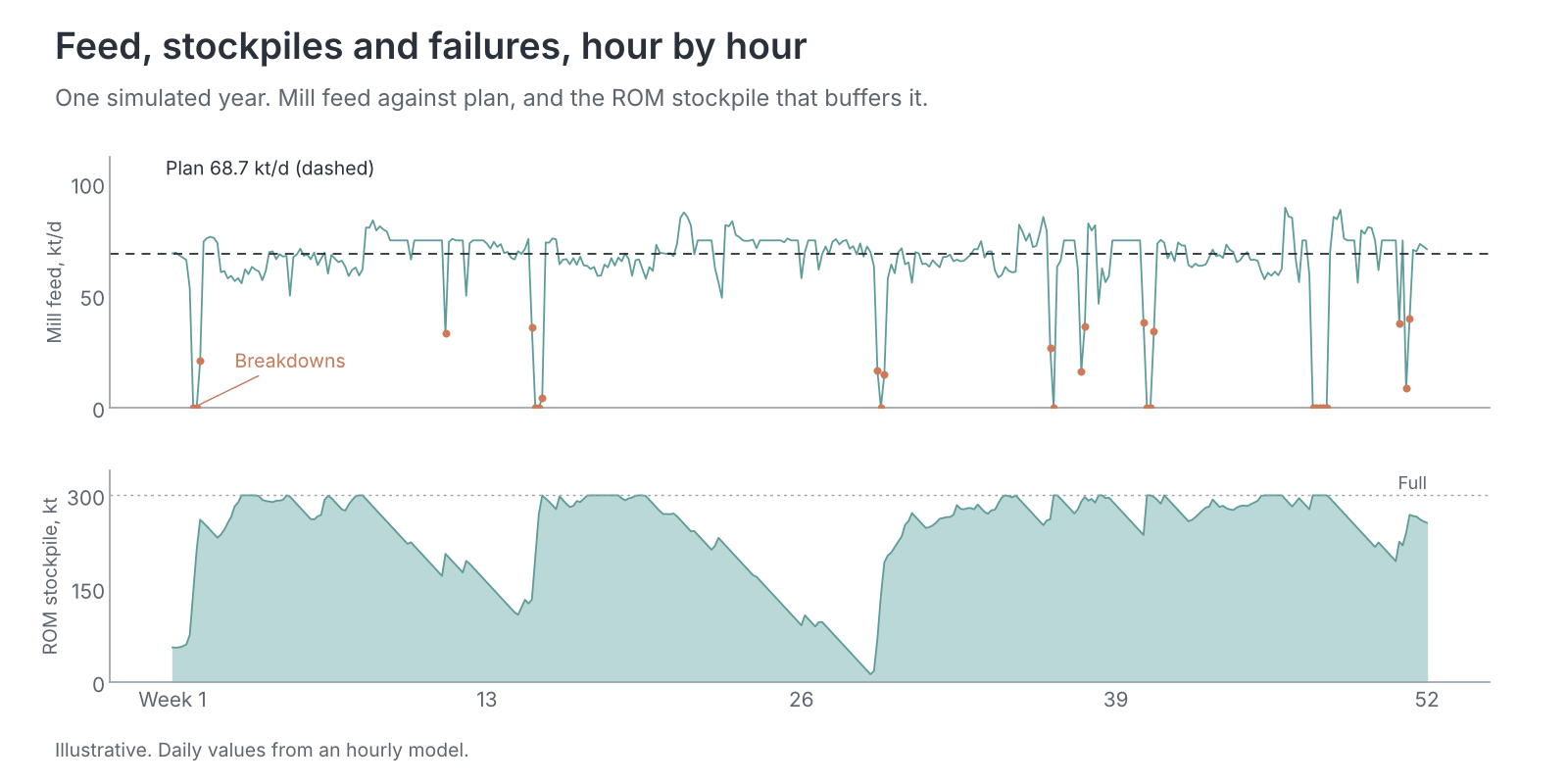
A digital representation of the whole chain, from mine to port, built from the study’s data and assumptions and the knowledge of the engineers who know each area best. Detailed to equipment level where it matters. Ore properties set mill rate and recovery as the feed changes, stockpiles fill and drain, and equipment fails and is repaired the way it does in operation.
Watch: Will your mine meet its production target?
- Ore properties driving mill rate and recovery
- Stockpiles, surge capacity and rehandle
- Failures, repairs and planned maintenance
3
Production range
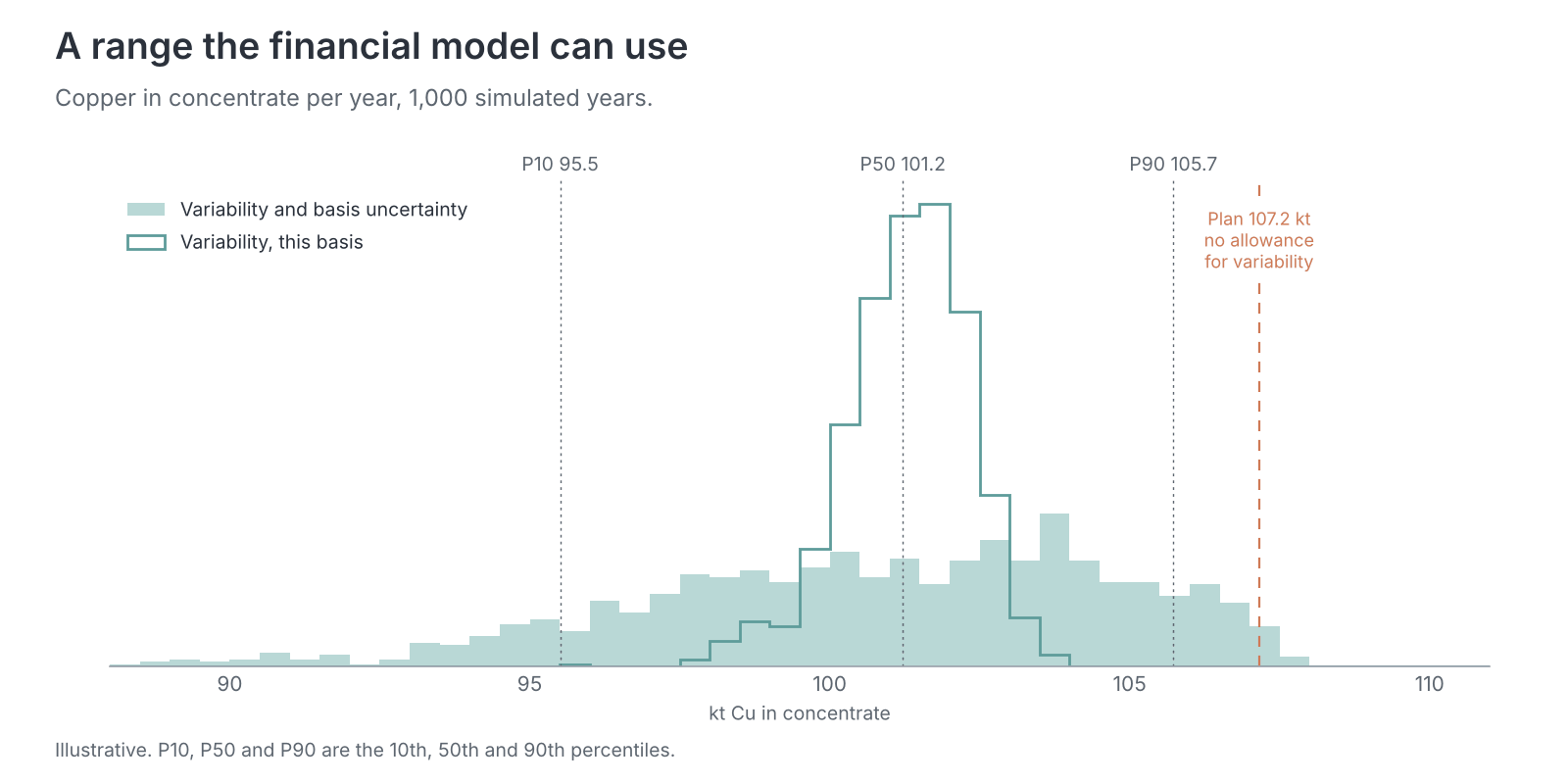
Operating variability and uncertainty in the study basis, modelled separately and combined deliberately. The result is expected annual production and its spread, not a single number with a plus or minus. Production is the biggest value lever the owner can influence. The range goes into the financial model, so the study’s economics reflect the production the investment will actually face.
Watch: Beyond sensitivity analysis
- Expected annual production and its spread
- The assumptions that move the result most
- Inputs ready for the financial model
4
Design trade-offs
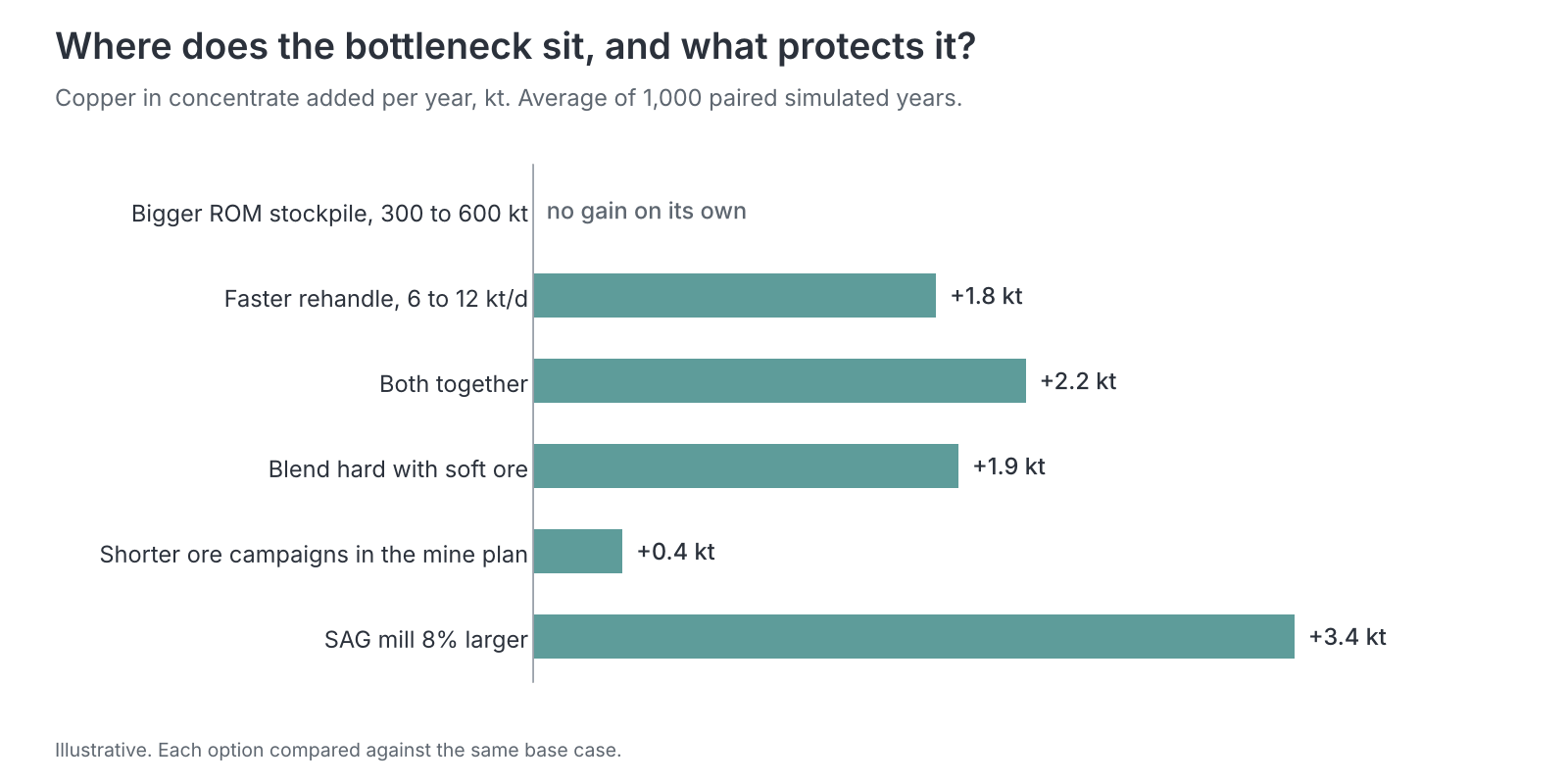
Throughput is a system result, not a single-asset result. Test storage, blending, sequencing and equipment sizing before the design is frozen, and compare the production gains on one basis.
- Where the bottleneck sits and what protects it
- Production gains compared on one basis
- Evidence for engineering and sanction reviews
Mine-to-plant simulation
An integrated mine-to-plant model run against the production target.
Beyond sensitivity analysis
Why a few sensitivity cases around the study basis are not a production range.
Related case studies
Copper-Gold Mine-to-Market
Integrated mine-to-market simulation evaluated production capacity, equipment criticality, storage requirements and truck fleet sizing across alternative mine plans and operating scenarios.
read the case studyBHP Jansen Potash Project
Published research documents how integrated simulation supported major production-capacity and capital investment decisions for the Jansen Potash Project.
read the case study
Have a study or sanction decision coming up?
Tell us where the study is and what’s being decided. We’ll suggest the smallest piece of work that answers it.
contact us