Terminals and Logistics
Know what the system can ship.
Each asset has a rated capacity. The system has a throughput.
In rail, terminal and port systems, throughput is set by how trains, stockpiles, berths, vessels and shared equipment interact. Variable arrivals, weather, equipment downtime and competing users create queues and delays that rated capacities and spreadsheet calculations do not capture. Storage cannot be sized independently of shipping, and berth capacity depends on what arrives at the berth.
MISIM builds integrated simulation models of terminals and the logistics chains they serve, from rail and storage through handling and vessel loading. They establish achievable throughput, size storage, fleets and berths, and test operating rules, commercial terms and capital alternatives before commitments are made.
We work for owners, shippers, terminal operators and port authorities, bringing an independent, system-level perspective to engineering decisions and commercial negotiations.
Inside a shared export terminal
1
Capacity and throughput
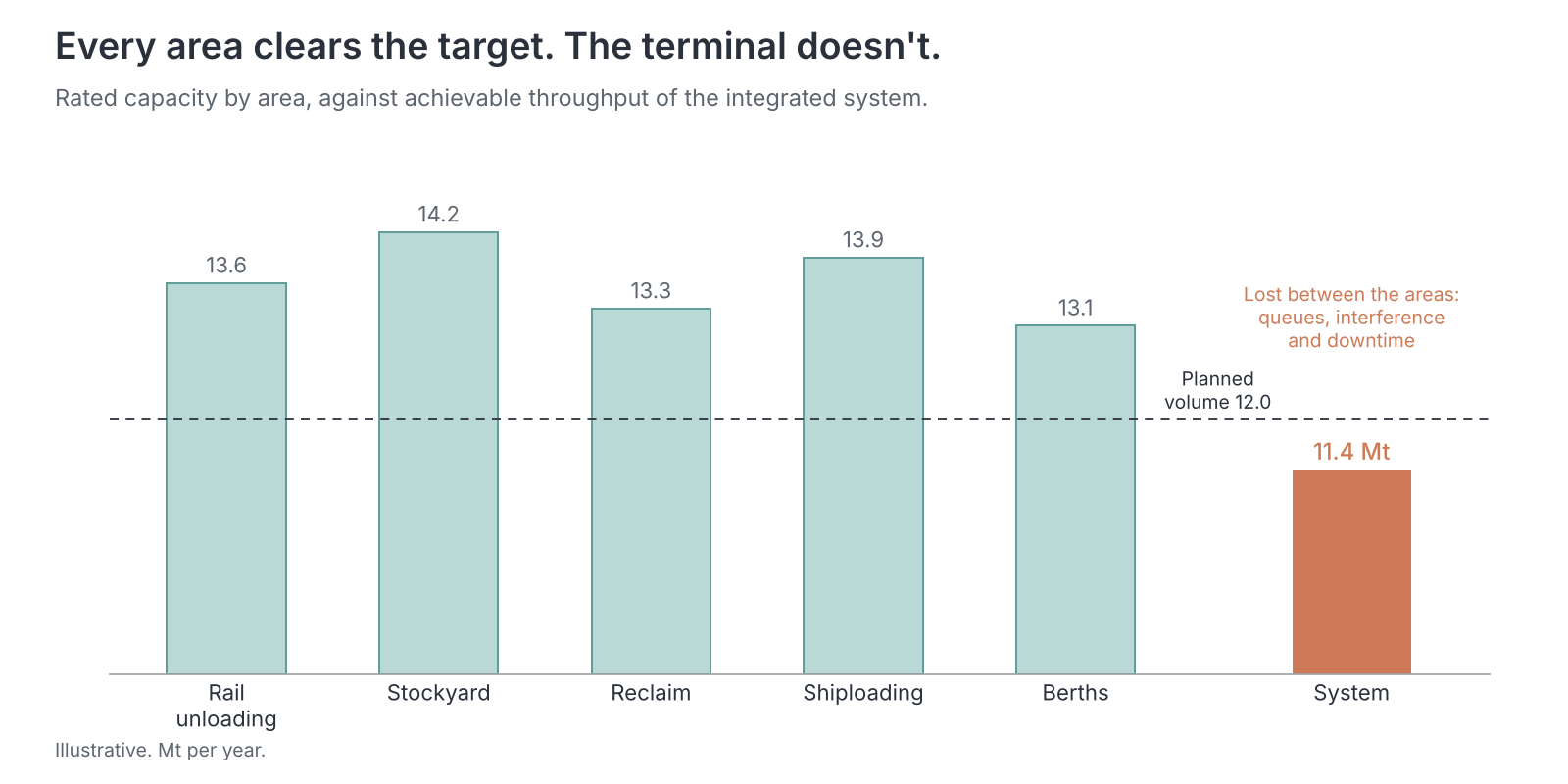
Can the terminal move the planned volume? Whether the scope is a single terminal or the wider chain, we establish achievable throughput under variable arrivals, equipment downtime, weather and the operating rules that govern shared resources. The results show where queues form, which resources constrain performance, and whether a shortfall calls for infrastructure or for better operating rules.
Read: Rail-Connected Logistics Facility
- Achievable throughput against planned volumes
- Queues, delays and their causes
- Constraints that need capital, and those that need operating changes
2
Storage, fleet and berth sizing
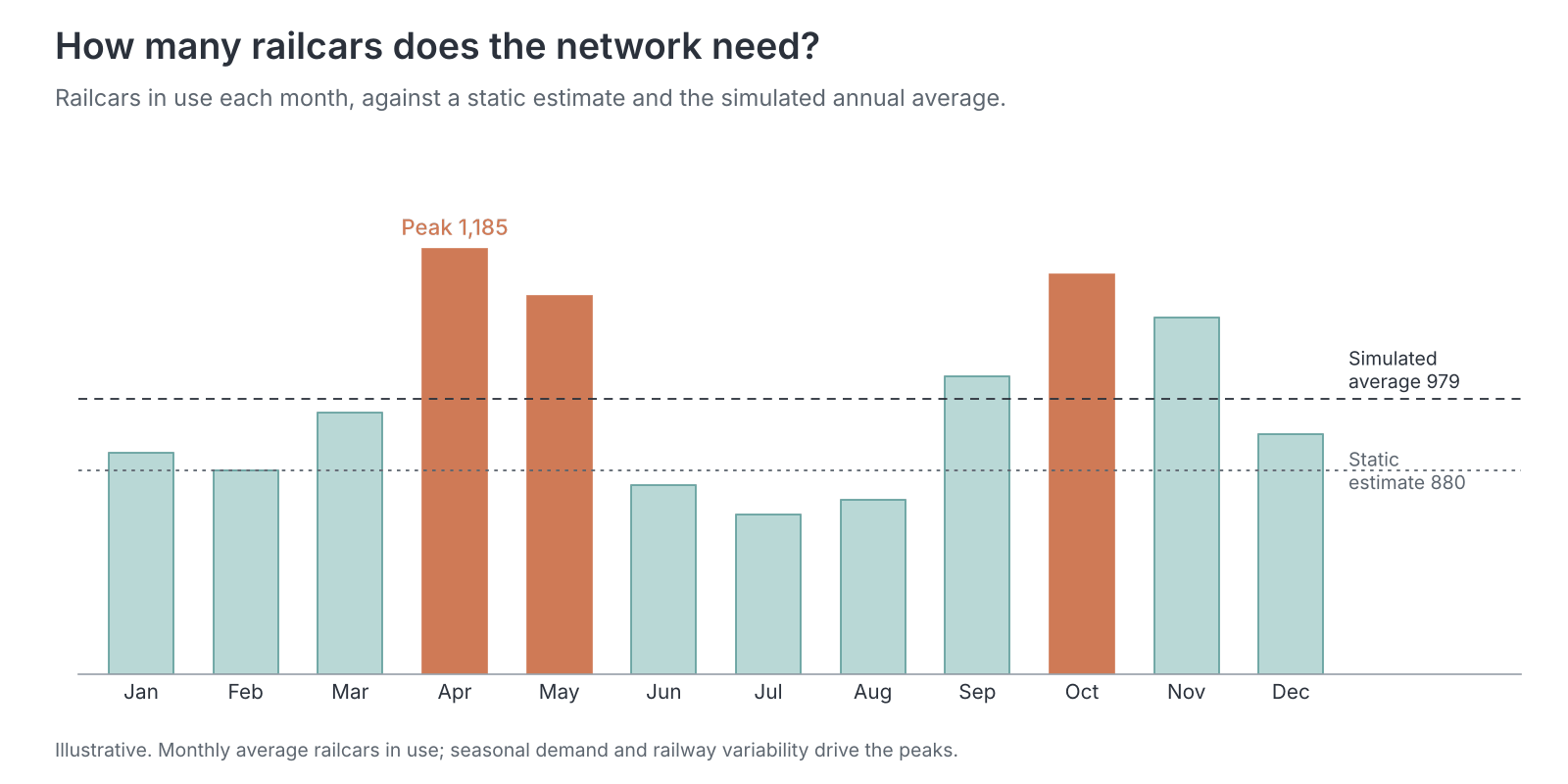
Storage, fleets and berths cannot be sized in isolation. Tank and stockpile requirements depend on shipping variability. Railcar fleets depend on cycle times and disruptions. Berth capacity depends on arrival patterns, navigation windows and loading rates. We size them together across a range of operating conditions, so the design holds up in a difficult year as well as an average one.
Read: Pacific Northwest LNG
- Storage and stockpile requirements
- Railcar, vessel and handling fleet sizing
- Berth occupancy, anchorage and vessel delays
3
Shared infrastructure and commercial terms
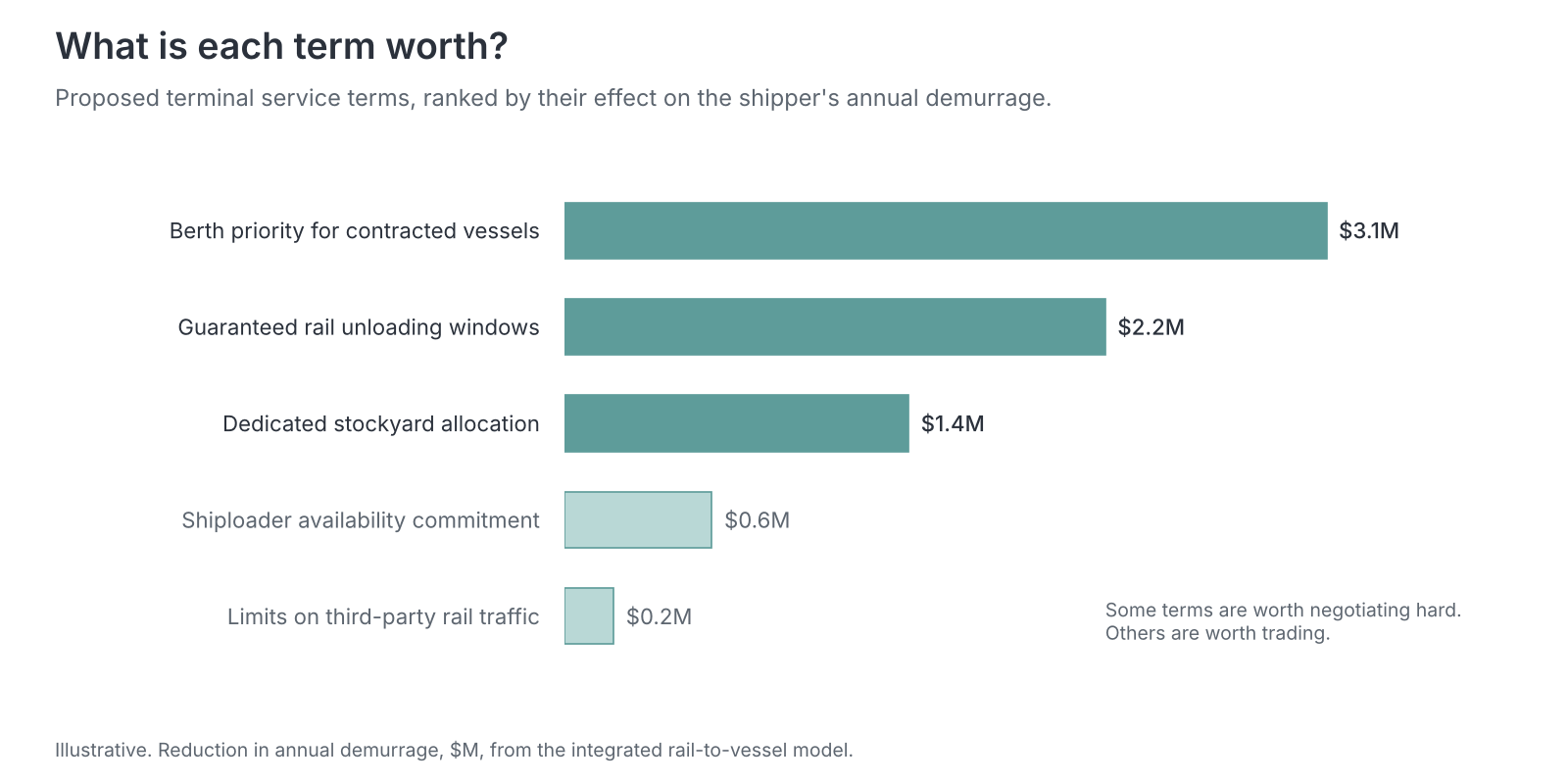
At a shared terminal, contractual priorities can matter as much as physical capacity. Service guarantees, priority rules and the allocation of track, berths and equipment determine how each user’s shipments perform when demand peaks. We model those terms explicitly, so shippers and operators can see what each term is worth before agreeing to it.
Watch: Inside a shared export terminal
- Proposed terms ranked by their operational impact
- The value of each concession, quantified as negotiations progress
- Demurrage, shipment and upstream production exposure
4
Capital and expansion
The value of an investment depends on how the whole system responds. Additional storage, track, berths or fleet may add little throughput if the constraint sits elsewhere. We test expansion and debottlenecking alternatives against a common operating baseline, so capital goes where it moves throughput.
Watch: More railcars or more storage?
- Incremental throughput and reliability of each alternative
- Fixed infrastructure compared with fleet and operating alternatives
- A defensible capacity basis for expansion and approvals
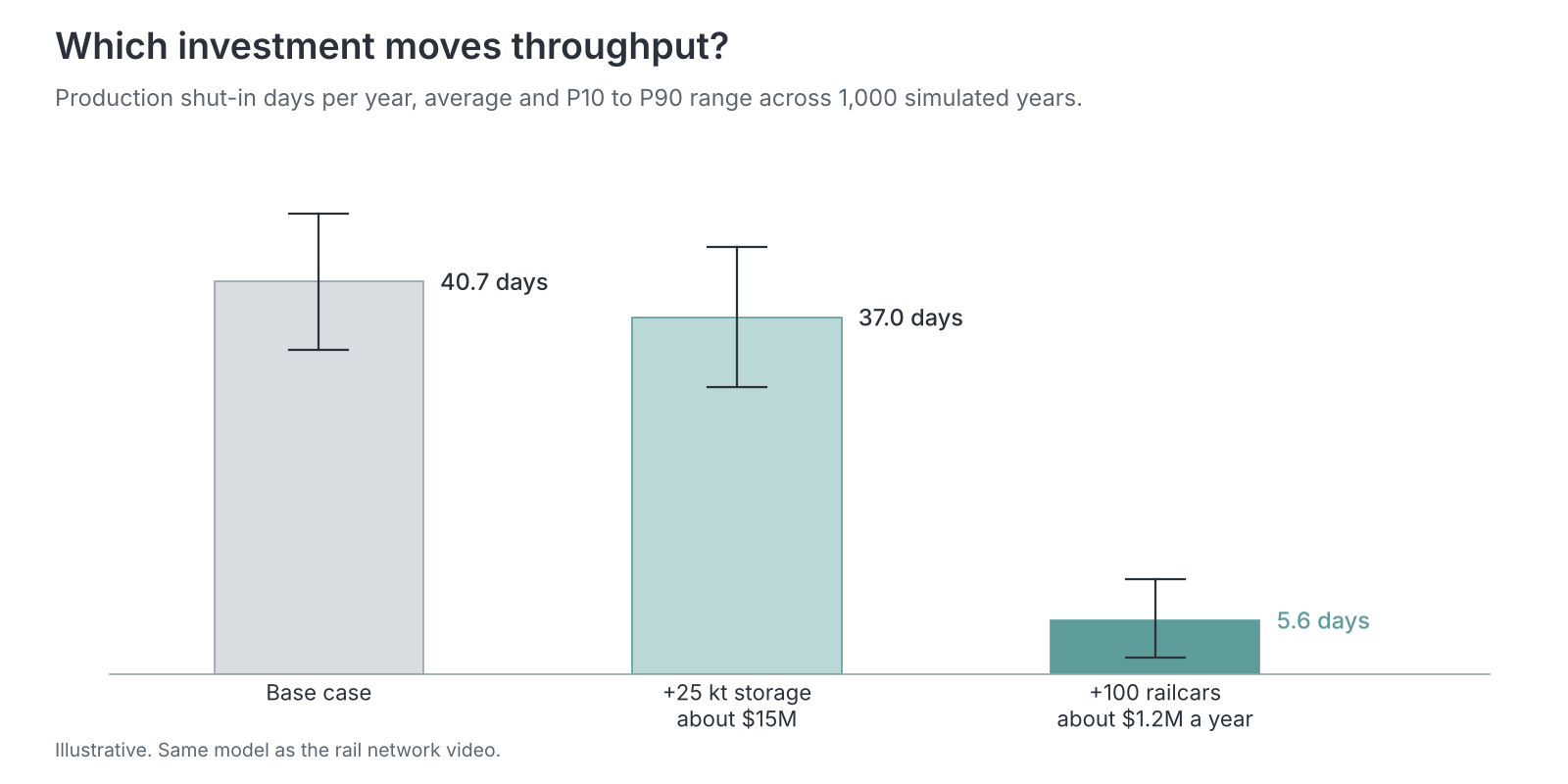
More railcars or more storage?
From railyard to market: AnyLogic Conference 2025
Related case studies
Shared Bulk-Export Terminal
read the case studyTrans Mountain Marine Terminal
read the case studyPacific Northwest LNG
read the case studyRail-Connected Logistics Facility
read the case study
Planning new capacity or negotiating terminal access?
Tell us about your system, the volumes it needs to move and the decisions you are facing. We can help establish the scope of analysis needed to support them.
contact us